你正在浏览的是我的毕业设计页面,如果你是公司的HR,请移步“其他项目 Other Project”浏览我的其他作品
You are currently viewing my thesis project page. Plz switch to "Other Project" page for my work info if you are a human resourse from an organization.

"Project Anime"是一个探索如何将二次元动画的视觉语言真实转化到3D动画中的创新项目。它的核心是开发了一个高度复杂的3D角色,能够精确控制服装细节(如外套下摆、裙子动态、袖口变形等),同时保持解剖学正确的身体结构以达成常见的动漫风格镜头。
项目通过创建完整的3D角色展示和制作传统2D动画序列进行双向验证,一方面创建了一个完整的3D角色作为主要展示内容,另一方面也制作了一些相关的2D不同类型的作品。深入分析动漫特有的表现手法,尤其是在情感表达和战斗场景等方面的独特处理方式。
Skip to 3D rigging character
跳转至3D角色绑定相关
Skip to 2D format artworks
跳转至2D分镜故事板相关
Introduction
"Project Anime" is an innovative project exploring how to authentically translate the visual language of anime into 3D animation. At its core is the development of a highly complex 3D character that enables precise control over clothing details (such as coat hems, skirt dynamics, sleeve deformation, etc.) while maintaining anatomically correct body structure in order to meet the classic anime action scene.
The project employs a two-fold validation approach: creating a complete 3D character as the main demonstration piece while also producing a couple 2D art works in various format. This allows for in-depth analysis of anime's unique expressive techniques, particularly in handling emotional expressions and combat sequences.
我的研究探索了动漫独特的视觉语言和叙事技巧,研究这些元素如何在保持其艺术本质的同时真实地转化为3D动画。随着全球娱乐业对3D动漫内容需求的增长,本研究致力于开发超越表面层次改编的创新方法,将动漫的核心原则融入3D角色创建和动画的基本方面。
Thesis Statement
My research explores the unique visual language and storytelling techniques of anime, investigating how these elements can be authentically translated into 3D animation while preserving their artistic essence. As the demand for 3D anime content grows in global entertainment, this investigation seeks to develop innovative approaches that go beyond surface-level adaptations, integrating anime's core principles into the fundamental aspects of 3D character creation and animation.
3D Character
Modeling/Rigging/Texture

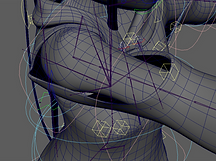
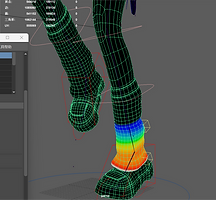

"Project Anime"通过一个从各方面都非常“二次元”的3D角色来展示这些原则,而不是依赖于赛璐璐渲染技术,这种方法更加注重动漫美学的基础。该角色通过其复杂的绑定系统实现了前所未有的关节灵活性。与通常为了技术可行性而简化服装和配饰的3D角色设计不同,该角色实现了复杂的关节结构,能够完全控制外套下摆、裙子动态、袖口和袜子褶皱等元素的动画。虽然这种级别的绑定复杂性带来了重大的技术挑战,但它使角色能够从动画摄影机角度实现精确构图的姿势——这是动漫视觉语言的一个关键特征。每个服装元素都能随角色自然移动,展现出解剖学正确的身体结构,展示了深层技术实现如何服务于真实的艺术表达。
“Project Anime” demonstrates these principles through a fully realized 3D character rather than relying on cel-shading techniques, which takes a more fundamental approach to anime aesthetics. The character features an unprecedented level of articulation through its complex rigging system. Unlike typical 3D character designs that often simplify clothing and accessories for technical feasibility, this character implements intricate joint structures, enabling full animation control over elements such as coat hems, skirt dynamics, sleeve cuffs, and sock folds. While this level of rigging complexity poses significant technical challenges, it enables the character to achieve precisely composed poses from the animation camera angle - a key characteristic of anime's visual language. Each element of clothing moves naturally with the character, revealing an anatomically correct body underneath, demonstrating how deep technical implementation can serve authentic artistic expression.


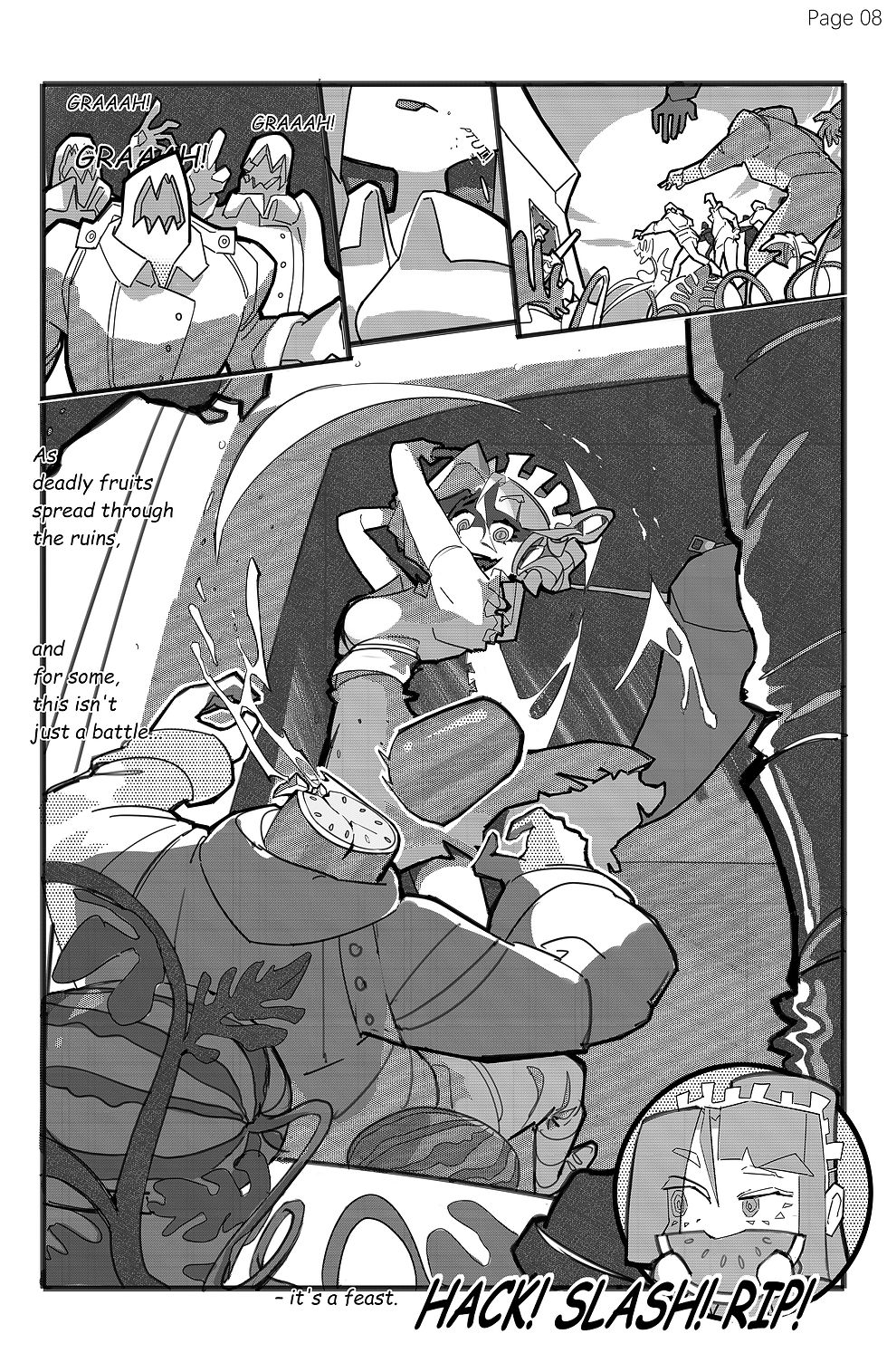
为了补充3D角色开发的技术成就并展示我对动漫美学的全面理解,我还创作了一部传统的漫画作品。通过特意选择漫画作为这一组成部分,我能够直接参考和分析动漫的核心视觉原则。作为动画的前身,漫画提供了独特的参考价值,展示了如何将静态图像转化为动态表现的基础。这部漫画特别探索了区分日式漫画与美式漫画的独特方面,例如情感表达和战斗场景的独特处理方式。
Manga Series...!
To complement the technical achievements in 3D character development and demonstrate my comprehensive understanding of anime aesthetics, I also created a traditional manga work. By deliberately choosing manga for this component, I could directly reference and analyze the core visual principles of anime. As a precursor to animation, manga provides unique reference value, showing the foundation of how static images can be transformed into dynamic expression. This manga specifically explores the unique aspects that differentiate Japanese manga from Western comics, such as the distinctive handling of emotional expressions and combat sequences.


Through this research and practical implementation, I have demonstrated a novel approach to bridging traditional anime aesthetics and contemporary 3D animation techniques. This work not only establishes new possibilities for complex character rigging in Maya but also offers valuable insights for artists and studios seeking to create authentic anime expressions in 3D animation, contributing to the evolution of this unique art form.
通过这项研究和实践实施,我展示了一种将传统动漫美学和当代3D动画技术结合的新方法。这项工作不仅为Maya中的复杂角色绑定开辟了新的可能性,也为希望在3D动画中创造真实动漫表现的艺术家和工作室提供了宝贵的见解,推动了这种独特艺术形式的演进。